

The Mileage Cliff: Why Selling at 59,000 Miles is Smarter than 61,000

Most people sell their car when they are "ready" to sell. Maybe they want a new one, or maybe their lifestyle changed.
But if you ignore your odometer, your timing could be costing you thousands of dollars.
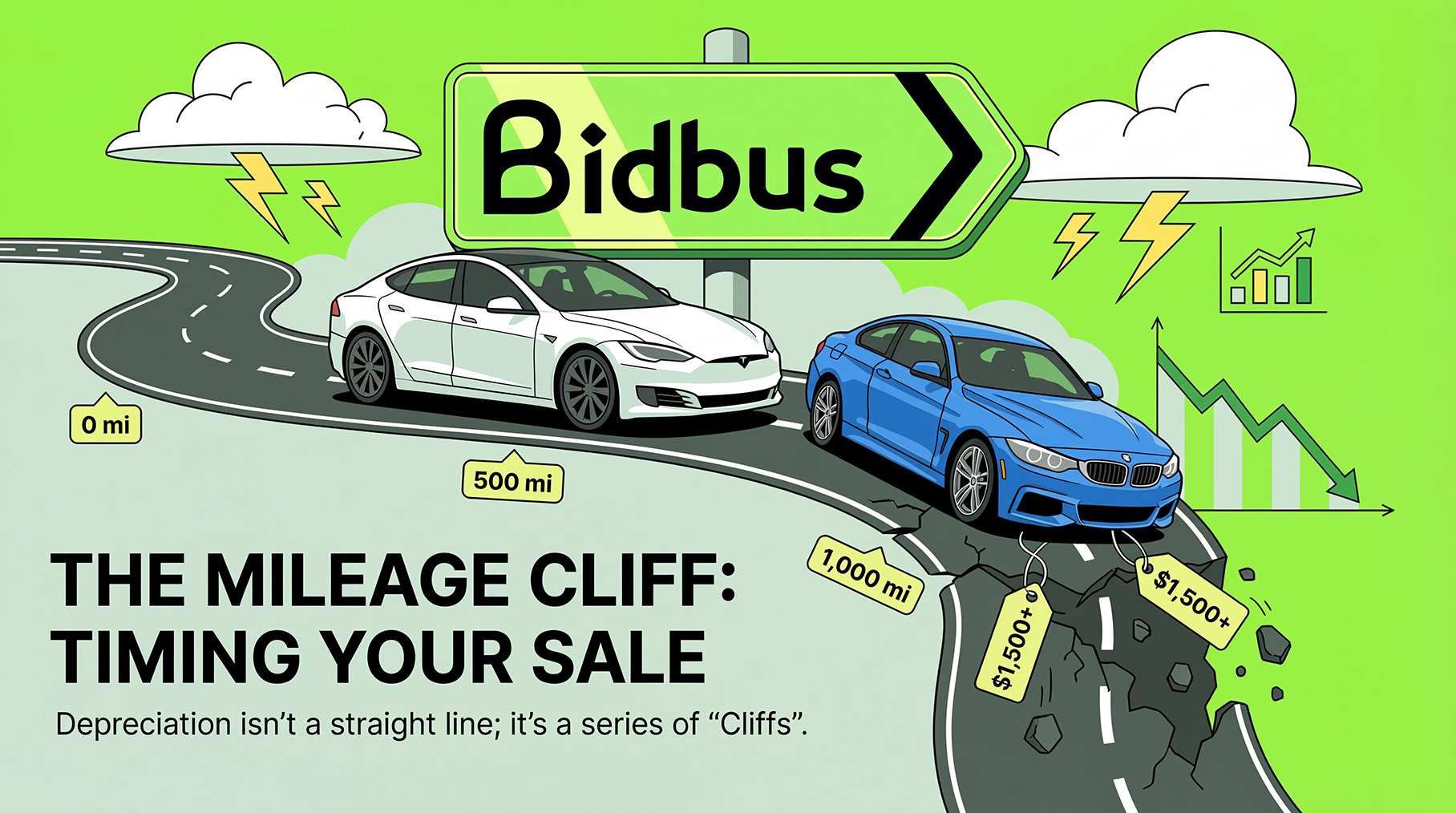
In the automotive world, depreciation is not a straight line. It is a series of cliffs. There are specific mileage milestones that trigger a psychological and financial drop in your car's value.
Here is the "Insider Logic" on why mileage matters more than you think, and how to sell before you fall off the cliff.
This is the biggest value driver in the used car market.
Dealers love to sell "Certified Pre-Owned" (CPO) vehicles. These are used cars that come with a factory-backed warranty. They sell for a premium, so dealers pay a premium to buy them.
However, manufacturers have strict rules. For example, many brands only allow a car to be "Certified" if it has under 60,000 miles.
At 59,000 Miles: Your car is a "CPO Candidate." A dealer can slap a warranty on it and sell it for top dollar. They bid aggressively.
At 61,000 Miles: Your car is just a "Used Car." It is ineligible for the program.
Crossing that 60,000-mile mark can instantly drop your trade-in value by $1,000 or $1,500. If you are close to the line, sell before you cross it.
We all know this one, but the financial impact is real.
When a buyer searches for a car on AutoTrader or CarGurus, they use filters. The most common filter is "Under 100,000 Miles."
At 98,000 Miles: Your car appears in 100% of the searches.
At 102,000 Miles: Your car becomes invisible to half the market.
Dealers know this. They know that a car with 100k+ miles sits on the lot longer. So they bid significantly less to protect themselves from the risk. The difference between 99k and 101k is just a few tanks of gas, but it can be a massive difference in your check.
Every car has a maintenance schedule. For many vehicles, the "Big One" (timing belt, water pump, transmission flush) hits around 90,000 miles.
Since dealers bid on your car "as-is," they don't dig through your glovebox for receipts. They simply play the odds. Dealers know the maintenance schedules by heart. When they see a car with 92,000 miles, they automatically assume the big service hasn't been done yet, and they lower their bid to cover that future cost.
If you are approaching a major service interval, you have a financial choice:
1. Keep it: And get stuck paying the $1,500 maintenance bill yourself at retail prices.
2. Sell it early: Sell the car at 85,000 miles before the "Big One" is due.
The smartest financial move is Option 2. Don't pay for a service on a car you are about to sell. Let the dealer buy it and perform that maintenance in their own shop at wholesale cost. You save the cash, and they get the inventory.
Your odometer is a ticking clock.
Go check your mileage right now. If you are hovering near a "Cliff" (36k, 60k, or 100k), you have a window of opportunity. Selling now, while you are still on the safe side of the number, puts you in a different inventory class.
Don't let a weekend road trip push you into a lower price bracket. Watch the miles, and sell before the drop.


Sell your car fast,
for more
Get your top dollar offer fast - We let 1,000's dealers compete to buy your car online.